





Wearable technologies, including smartwatches, fitness trackers, sensor patches, and smart textiles, are changing how physiological and behavioral data can be captured in clinical research. Unlike traditional clinical assessments, which rely on periodic measurements during scheduled study visits, connected devices can enable continuous or near-continuous monitoring in participants’ everyday environments. Depending on the device and application, wearables can capture parameters such as heart rate (HR), glucose, physical activity, sleep, body temperature, and peripheral oxygen saturation (SpO2).
In modern clinical research, wearables offer two important opportunities. First, they have the potential to enhance participant safety by enabling longitudinal monitoring of relevant physiological parameters beyond the controlled environment of the clinical site. This real-world monitoring (RWM) capability may allow researchers to identify transient physiological changes or events that might otherwise go unnoticed between clinic visits, potentially enabling earlier detection and clinical assessment of adverse events. Second, under appropriate conditions, wearable-derived measures may serve as secondary or, in some cases, primary outcome measures in clinical trials. This could allow researchers to characterize pharmacodynamic effects, treatment response, and longitudinal changes associated with disease with a level of temporal granularity that may be difficult to achieve through conventional clinical assessments alone.
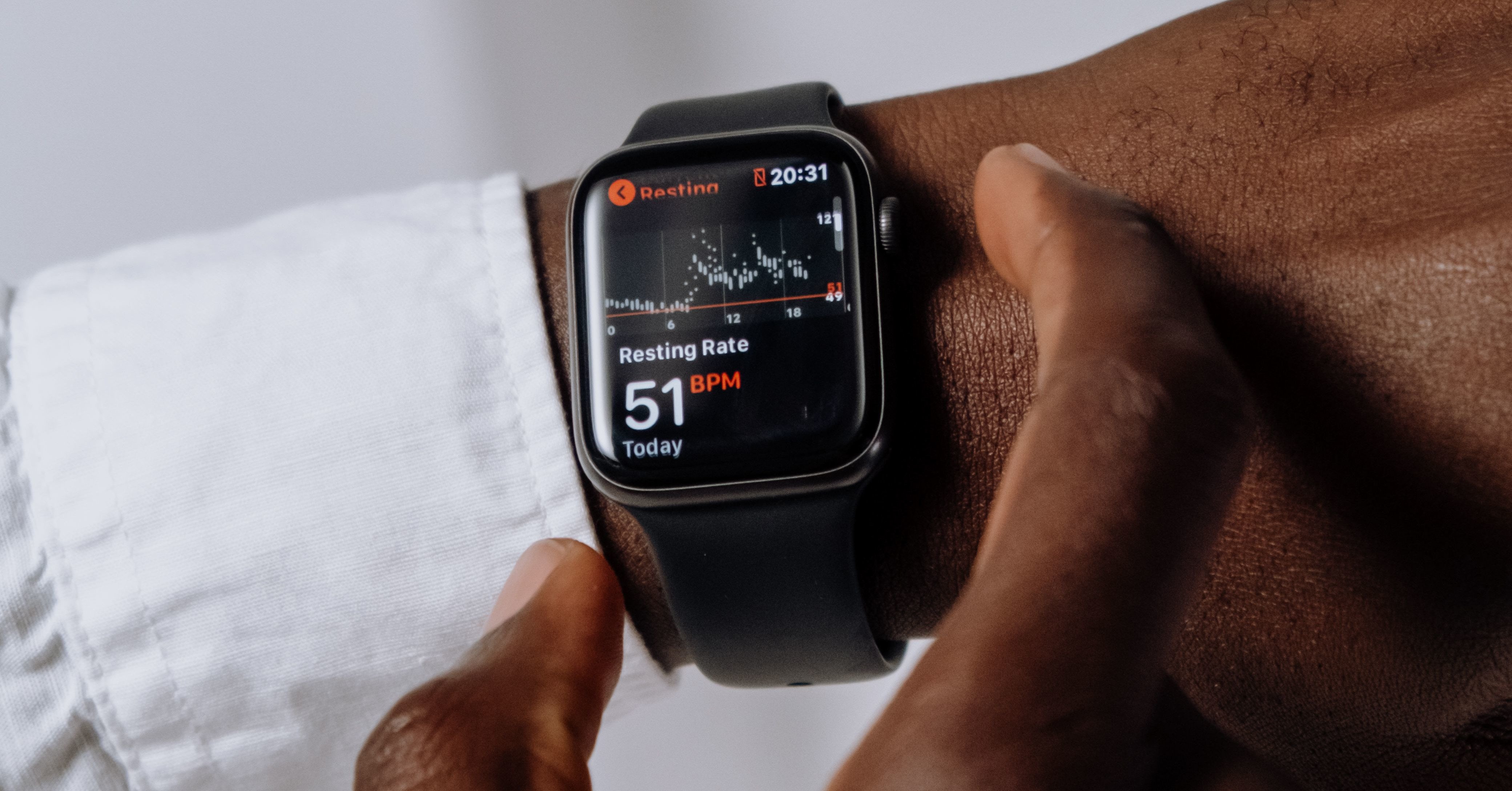
Real-world monitoring: From clinical snapshots to longitudinal insights
A major advantage of wearables is their potential for real-world monitoring. Conventional clinical assessments often provide a snapshot: a measurement obtained at a specific point in time and frequently under highly controlled conditions. While these assessments remain essential, they may not fully capture how a participant's physiology changes throughout the day or in response to everyday activities and environmental factors.
Wearables, by contrast, can enable longitudinal data collection in participants' everyday environments. Researchers may be able to capture physiological fluctuations, trends, and episodic events, such as nocturnal changes in heart rhythm or alterations in gait and mobility, that could remain undetected during intermittent study visits.
Wearable-derived data can also provide an objective, time-stamped complement to patient-reported outcomes (PROs). PROs remain essential for understanding the patient experience, but they can be influenced by recall and reporting bias. Wearable measurements may provide additional physiological or behavioral context, helping researchers understand how subjective experiences relate to objectively observed changes over time.
Importantly, however, as of now wearable data should complement rather than replace clinical assessment. A physiological signal detected by a wearable is not necessarily an adverse event or a clinically meaningful change. Its interpretation depends on the quality of the measurement, the participant's baseline, the surrounding context, and the clinical question being addressed.
From raw data to clinically meaningful information: The digital biomarker challenge
A critical distinction must be made between data and information. High granularity data collection does not automatically translate into clinical value. The transition from sensor readings to meaningful clinical insights involves substantial analytical and methodological challenges [1].
Consider a single increase in heart rate. On its own, the measurement provides limited information. The same value may be entirely expected during physical activity but potentially more relevant when observed during sleep or at rest. The key question is therefore not simply whether a measurement deviates from a predefined threshold, but whether the observed change represents a meaningful physiological signal potentially associated with an adverse event, treatment effect, disease progression, or another clinically relevant event.
One of the central challenges is the sheer volume and velocity of data generated by wearable devices. This "big data" environment can contain substantial amounts of variability, including measurement artefacts, stochastic noise, and benign physiological fluctuations. Distinguishing these patterns from clinically meaningful changes is essential.
This is where digital biomarkers and digital endpoints become particularly important. A sensor signal is not automatically a biomarker. The analytical process must establish how raw sensor data are transformed into a reproducible digital measure and whether that measure meaningfully reflects a physiological state, disease characteristic, treatment response, or clinical outcome.
Developing a clinically useful digital biomarker therefore requires rigorous processing, appropriate contextual metadata, and validation. Depending on the intended use, this may include demonstrating analytical validity, reliability, sensitivity to change, clinical validity, and relevance to the clinical concept of interest. The objective is to establish that a digital measure captures meaningful physiological or clinical change while minimizing false-positive findings caused by non-pathological activity or measurement artefacts.
Beyond fixed thresholds: The role of AI and context
Traditional monitoring approaches often rely on predefined thresholds. While thresholds can be useful, rigid limits may generate substantial numbers of false-positive alerts when individual baseline characteristics and context are not considered. A high heart-rate value, for example, may be expected during exercise but potentially more concerning during sleep or prolonged rest. Similarly, changes in activity or sleep may have very different interpretations depending on a participant's disease, treatment, baseline behavior, and environmental conditions.
Artificial intelligence (AI) and machine-learning approaches may help address some of these challenges by identifying complex patterns and relationships within high-frequency, multidimensional datasets [2]. Rather than evaluating each measurement independently, algorithms can potentially recognize deviations from an individual's typical physiological patterns or identify combinations of signals that warrant further assessment. However, AI is not a substitute for rigorous validation. Its application in clinical research introduces additional considerations, including model performance, interpretability, bias, data quality, generalizability, ongoing performance monitoring, and regulatory compliance. In Europe, the requirements applicable under the EU AI Act depend on the intended use and classification of the AI system.
The concept of a digital twin represents a related but distinct development. A digital twin can be understood as a dynamic computational representation of an individual or system that is continuously informed by relevant data and potentially used for prediction or simulation. Wearable data could contribute to such models in the future, but collecting wearable data alone does not constitute a digital twin.
The future: Multisensor integration and context-aware monitoring
The next frontier in wearable technology lies in moving beyond isolated measurements toward intelligent, multisensor monitoring systems. Multiple sensors can capture different physiological and behavioral signals simultaneously, creating a more comprehensive picture of an individual's state. The potential value of this approach lies in the integration and cross-correlation of different data streams. For example, combining accelerometry, which characterizes movement, with PPG, from which heart rate can be derived, may help distinguish an elevated heart rate associated with physical exertion from a change occurring without a corresponding increase in activity.
Similarly, combining information on activity, sleep, heart rate, temperature, and other physiological parameters may reveal relationships that would remain difficult to identify when individual measurements are considered in isolation. Context-aware monitoring adds another important dimension. Rather than interpreting a measurement independently, context-aware systems can incorporate information about the circumstances in which the measurement was obtained. Algorithms may account for whether a participant is asleep, exercising, experiencing psychological stress, or exposed to environmental conditions such as extreme temperature or humidity.
This contextualization is essential for distinguishing normal physiological variability from changes that may indicate disease progression, treatment response, or treatment-related toxicity.
Navigating the challenges: Technical, behavioral, and regulatory
Despite their potential, several significant challenges must be addressed before wearable-derived measures can be routinely integrated into clinical research.
Data Quality and Interoperability
A lack of standardization across manufacturers remains an important challenge. Different devices may use different sensors, sampling frequencies, signal-processing methods, and proprietary algorithms. Consequently, a heart-rate measurement derived from a medical-grade sensor patch may not be directly comparable with a measurement obtained from a consumer-grade smartwatch. For clinical research, understanding the characteristics and limitations of the specific device and measurement pipeline is therefore essential. Standardized approaches to data acquisition, processing, quality control, and reporting can help improve comparability across participants and studies.
Technical reliability and participant adherence
Participant adherence is another important determinant of data quality. Devices may be removed, worn incorrectly, insufficiently charged, or unavailable during critical observation periods. These behavioral factors can interact with technical issues, including sensor displacement, signal artefacts, battery limitations, and connectivity interruptions, to create missing or unreliable data. For this reason, wearable-based clinical research requires not only appropriate technology but also carefully designed participant instructions, monitoring procedures, data-quality checks, and predefined approaches for handling missing or poor-quality data.
Privacy and security
The continuous collection of physiological and behavioral information raises important ethical, privacy, and cybersecurity considerations. Wearable datasets can provide highly detailed insights into an individual's daily activities and physiological state. Protecting participant privacy therefore requires robust data governance, appropriate pseudonymization, access controls, secure data transmission and storage, and clear policies governing how data are processed, shared, and retained.
Regulatory considerations
Using wearable-derived measures as clinical trial endpoints requires a robust evidence package. Depending on the intended use, sponsors may need to demonstrate analytical validity, clinical validity, reliability, sensitivity to change, and the relationship between the digital measure and the clinical concept of interest. Regulatory experience with wearable-derived endpoints remains more limited than for many conventional clinical endpoints, and expectations can vary according to the device, digital measure, intended use, and study context. Early consideration of regulatory requirements and, where appropriate, engagement with relevant authorities can therefore be an important part of digital endpoint development.
Conclusion: From more data to better evidence
The future of wearable technology in clinical research will depend not simply on collecting more data, but on converting high-frequency real-world measurements into reliable, interpretable, and clinically meaningful information. Wearables have the potential to move clinical research beyond periodic snapshots toward a more comprehensive understanding of how physiology and behavior change over time and in real-world environments. Multisensor integration, contextualized analysis, and increasingly sophisticated analytical methods may further improve our ability to distinguish meaningful physiological changes from normal variability and stochastic noise.
At Profil, we aim to contribute to this transition by integrating wearable-derived data into rigorous clinical research frameworks, with a focus on data quality, validation, and clinical relevance. This mission is further strengthened through our collaboration with Prof. Jordan and Prof. Tank at the DLR’s Institut für Luft- und Raumfahrtmedizin. Together, we aim to ensure that wearables are established not merely as an add-on to conventional assessments, but as a scientifically robust component of modern clinical research.
Interested in learning more about how wearable technologies and digital biomarkers can be integrated into clinical research? Reach out to our experts.
References
El-Galaly TC, et al. Beyond maximum grade: the role of real-world digital health technologies to capture, predict, and manage treatment toxicity in haematological cancers. Lancet Haematol. 2026;13(9):e679-e689.
Jacobsen M, et al. Wearable based monitoring and self-supervised contrastive learning detect clinical complications during treatment of Hematologic malignancies. NPJ Digit Med. 2023;6(1):105.